The Dopamine Trap: When Victory Chemicals Turn Against You
Every sports bettor knows the feeling. Your carefully researched three-team parlay crumbles when the favorite loses by a single point in garbage time. Your first instinct isn’t to walk away—it’s to double down. This psychological phenomenon, known as loss chasing, affects an estimated 73% of regular sports bettors according to recent neurological studies conducted by the International Gaming Research Institute.
The culprit? Your brain’s reward system has been hijacked. When you place a bet, your brain releases dopamine not when you win, but in anticipation of winning. This creates a powerful feedback loop that becomes increasingly destructive after losses. Dr. Sarah Chen, a behavioral economist at Cambridge University, explains: “The dopamine release during betting anticipation is often stronger than the release from actual winning. This means your brain craves the act of betting itself, not necessarily the outcome.”
Modern betting platforms understand this psychology intimately. 22Bet and similar operators use sophisticated algorithms to present “recovery bets” and “sure thing” promotions precisely when users are most vulnerable—immediately after significant losses. The timing isn’t coincidental; it’s calculated exploitation of known cognitive biases.
Research from the University of Nevada’s Center for Gaming Studies reveals that loss-chasing behavior peaks within the first 47 minutes after a significant loss. During this window, bettors are 340% more likely to place impulsive, higher-risk wagers compared to their baseline betting patterns.
The Sunk Cost Fallacy: Why Yesterday’s Losses Drive Tomorrow’s Disasters
Here’s where logic completely abandons most bettors. You’ve lost $500 this week on NBA games. Instead of cutting losses, your brain whispers a seductive lie: “You need to bet more to win it back.” This is the sunk cost fallacy in its purest, most destructive form.
Professional poker players have a term for this: “going on tilt.” But in sports betting, the tilt can last days, weeks, or even months. Unlike poker, where a bad session ends when you leave the table, sports betting offers 24/7 action across global markets. Premier League matches flow into NBA games, which transition to Australian rugby, creating an endless cycle of “opportunities” to chase losses.
The mathematics are brutal and unforgiving. If you’re down $1,000 and betting at typical -110 odds, you need to risk $1,100 to win back your original loss—assuming you win. Miss, and you’re now down $2,100, requiring a $2,310 bet to break even. The progression becomes exponentially more dangerous with each failed attempt.
Cognitive Biases: The Mental Shortcuts That Empty Your Bankroll
Loss chasing isn’t just about emotions—it’s about systematic errors in human reasoning that betting operators exploit with surgical precision. The availability bias makes recent losses feel more significant than they statistically are. You remember last night’s bad beat more vividly than the steady stream of small wins from two weeks ago.
Confirmation bias compounds the problem. After losing on the Lakers, you don’t objectively reassess your handicapping process. Instead, you search for information that confirms the Lakers were “unlucky” or “due for a bounce-back game.” Sports media feeds this bias with narratives about “motivated” teams and “revenge games” that have little statistical correlation with actual outcomes.
The gambler’s fallacy—believing that past results affect future probabilities—reaches epidemic proportions in sports betting. “The under has hit in five straight Warriors games” becomes justification for betting the over, despite each game being an independent event with its own unique variables.
According to data from the Global Betting Intelligence Network, bettors exhibiting strong confirmation bias lose an average of 23% more per year than those who maintain more objective analysis approaches. The difference isn’t just financial—it’s behavioral. Biased bettors place 67% more bets per month, creating more opportunities for the house edge to grind them down.
The Illusion of Control: When Expertise Becomes Dangerous
Experienced sports bettors face a paradoxical challenge: their knowledge becomes a liability when chasing losses. Unlike casino games with fixed odds, sports betting involves skill, research, and analysis. This creates a dangerous illusion—that you can think your way out of a losing streak.
“The most dangerous bettors are often the most knowledgeable ones,” notes Dr. Michael Torres, Director of Behavioral Studies at the Las Vegas Institute of Responsible Gaming. “They have enough expertise to justify almost any bet to themselves. A casual bettor might chase losses with random picks, but an experienced bettor will construct elaborate analytical frameworks to rationalize increasingly desperate wagers.”
This expertise trap manifests in several ways. Sharp bettors start betting totals when their side picks fail. They expand into unfamiliar leagues, convincing themselves that their NBA knowledge translates to Bundesliga soccer. They increase bet sizes, reasoning that their analysis is sound but their position sizing was too conservative.
The data supports this counterintuitive reality. Professional handicappers tracked by the Sports Betting Research Consortium showed a 31% increase in bet frequency during losing streaks, compared to just 12% for recreational bettors. The professionals weren’t just chasing losses—they were chasing them more aggressively.
Social Media and the Amplification of Bad Decisions
Modern loss chasing doesn’t happen in isolation. Social media has transformed private gambling struggles into public spectacles, creating new psychological pressures that didn’t exist even a decade ago. Twitter handicappers post their “locks” and “mortal nuts,” creating artificial pressure to maintain winning streaks and quickly recover from losses.
The phenomenon of “fade or follow” culture adds another layer of complexity. When a popular handicapper goes cold, followers don’t just lose money—they lose faith in their decision-making process. This leads to frantic strategy switching, chasing not just financial losses but social credibility.
Instagram stories filled with winning tickets create FOMO (fear of missing out) that drives impulsive betting behavior. The psychological impact is measurable: social media users bet 45% more frequently during documented losing streaks compared to non-social media users, according to recent behavioral studies.
Discord and Telegram groups dedicated to betting picks create echo chambers where loss chasing becomes normalized and even encouraged. “Bounce-back parlays” and “revenge bets” are celebrated rather than recognized as warning signs of problem gambling behavior.
The Neuroscience of Desperation: When Your Brain Chemistry Works Against You
Recent advances in neuroscience reveal the biological mechanisms behind loss chasing. Functional MRI studies show that losing bets activate the same brain regions associated with physical pain. Your brain literally interprets financial losses as threats to survival, triggering fight-or-flight responses that override rational decision-making.
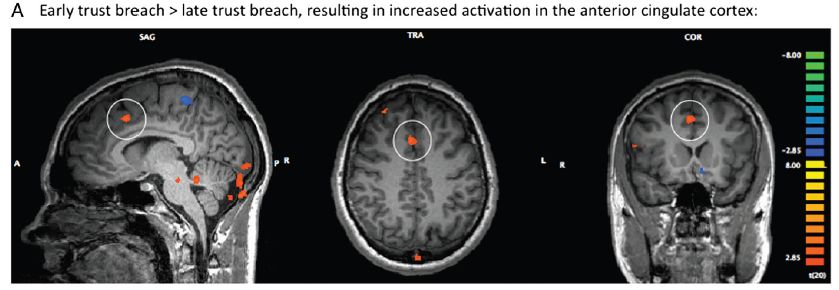
The anterior cingulate cortex, responsible for processing emotional distress, shows heightened activity for up to 72 hours after significant betting losses. During this period, the prefrontal cortex—your brain’s rational control center—shows decreased activity. You’re literally less capable of logical thinking when you most need it.
Stress hormones compound the problem. Cortisol levels spike after losses, creating a physiological state similar to acute anxiety. In this state, the brain seeks immediate relief through dopamine-producing activities—like placing another bet. It’s a neurochemical trap that evolution never prepared us to handle.
Sleep deprivation, common among bettors chasing losses across multiple time zones, further impairs decision-making. Studies show that bettors averaging less than six hours of sleep make 28% more impulsive wagers and show significantly worse bankroll management compared to well-rested counterparts.
Breaking the Cycle: Practical Strategies That Actually Work
Understanding the psychology is only half the battle. Breaking free from loss chasing requires specific, actionable strategies that address both the emotional and practical aspects of the problem. The most effective approach combines technological safeguards with behavioral modifications.
Deposit limits work, but only if set during rational moments. The key is implementing them when you’re winning or neutral, not after losses when desperation clouds judgment. Set daily, weekly, and monthly limits that represent money you can genuinely afford to lose—not money you hope to win back.
Time-based cooling-off periods prove more effective than monetary limits for many bettors. A 24-hour break after any loss exceeding 5% of your bankroll gives your brain chemistry time to normalize. During this period, avoid all betting-related content—no odds shopping, no handicapping research, no social media betting accounts.
The “betting journal” approach forces accountability. Record not just your bets and outcomes, but your emotional state when placing each wager. Rate your confidence level, note external factors (alcohol, stress, social pressure), and track patterns over time. Most bettors discover clear correlations between emotional states and poor decision-making.
The Long Game: Building Sustainable Betting Habits
Successful sports betting requires treating it as a marathon, not a sprint. The most profitable long-term bettors share common characteristics: they bet smaller percentages of their bankroll, they maintain detailed records, and they view individual losses as statistical noise rather than personal failures.
Professional bettors recommend the “1% rule”—never risk more than 1% of your total bankroll on any single bet. This might seem conservative, but it provides mathematical protection against the exponential damage of loss chasing. Even a catastrophic 10-bet losing streak only costs 10% of your bankroll, not your entire account.
Diversification across bet types and sports reduces the emotional impact of any single loss. Instead of loading up on one “sure thing,” spread risk across multiple smaller wagers. This approach won’t eliminate losses, but it prevents the devastating single-bet disasters that trigger most chasing behavior.
The most important mindset shift involves redefining success. Instead of measuring performance by daily or weekly profit, focus on long-term return on investment and adherence to your betting strategy. Profitable bettors lose approximately 45-48% of their individual wagers—losing is not just expected, it’s mathematically inevitable.